Ensuring Safe, Compliant, and Reliable Robotic Operations
Robotics safety in manufacturing is a fundamental requirement for modern automation systems. As industrial robots become more deeply integrated into production, assembly, material handling, and inspection processes, ensuring safe interaction between robotic systems, equipment, and personnel is critical to operational reliability, regulatory compliance, and workforce protection.
Properly engineered robotics safety systems do more than prevent workplace accidents and injuries. They reduce unplanned downtime, protect equipment, improve system uptime, and enable manufacturers to deploy automation with confidence. Safety is not an optional layer when it comes to automated robotic systems.
Why Robotics Safety Is Critical in Manufacturing Automation
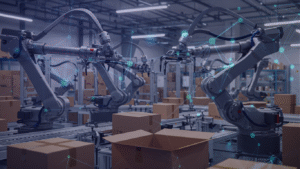
Industrial robots operate at high speeds, handle heavy payloads, and generate powerful mechanical motion. Without appropriate safeguards, these capabilities introduce significant risk to operators, maintenance personnel, and surrounding equipment.
A well-designed robotics safety strategy helps manufacturers:
- Protect employees from dangerous robotic motion
- Maintain compliance with industrial safety standards and regulations
- Reduce production interruptions caused by safety incidents
- Enable reliable and repeatable automated processes
- Support long-term automation scalability
By addressing safety during system design and integration, manufacturers create automation environments that balance productivity with controlled, predictable operation.
Common Robotics Safety Risks in Manufacturing Environments
Robotics safety risks vary based on application, system layout, and the level of human interaction. Common hazards in robotic manufacturing systems include:
- Unexpected robot motion during startup, recovery, or fault conditions
- Personnel entry into robot work envelopes
- End-of-arm tooling hazards such as pinch points, sharp edges, heat, or energy release
- Inadequate safeguards during programming, teaching, or maintenance
- Improper restart sequences after emergency stops
Identifying these risks early through formal risk assessments allows safety measures to be designed into the system rather than added reactively, after harm occurs.
Robotics Safety Standards and Regulatory Compliance
Robotics safety in manufacturing is guided by internationally recognized standards that define best practices for system design, integration, and operation.
Common robotics safety standards include:
- ISO 10218 – Safety requirements for industrial robots and robotic systems
- ANSI/RIA R15.06 – North American industrial robot safety standard
- ISO 13849 and IEC 62061 – Functional safety of control systems
- OSHA regulations related to machine guarding and workplace safety
Compliance with these standards ensures robotic systems are engineered using proven safety methodologies and accepted industry practices.
Core Components of an Industrial Robotics Safety System
Effective robotics safety relies on multiple layers of protection working together to reduce risk.
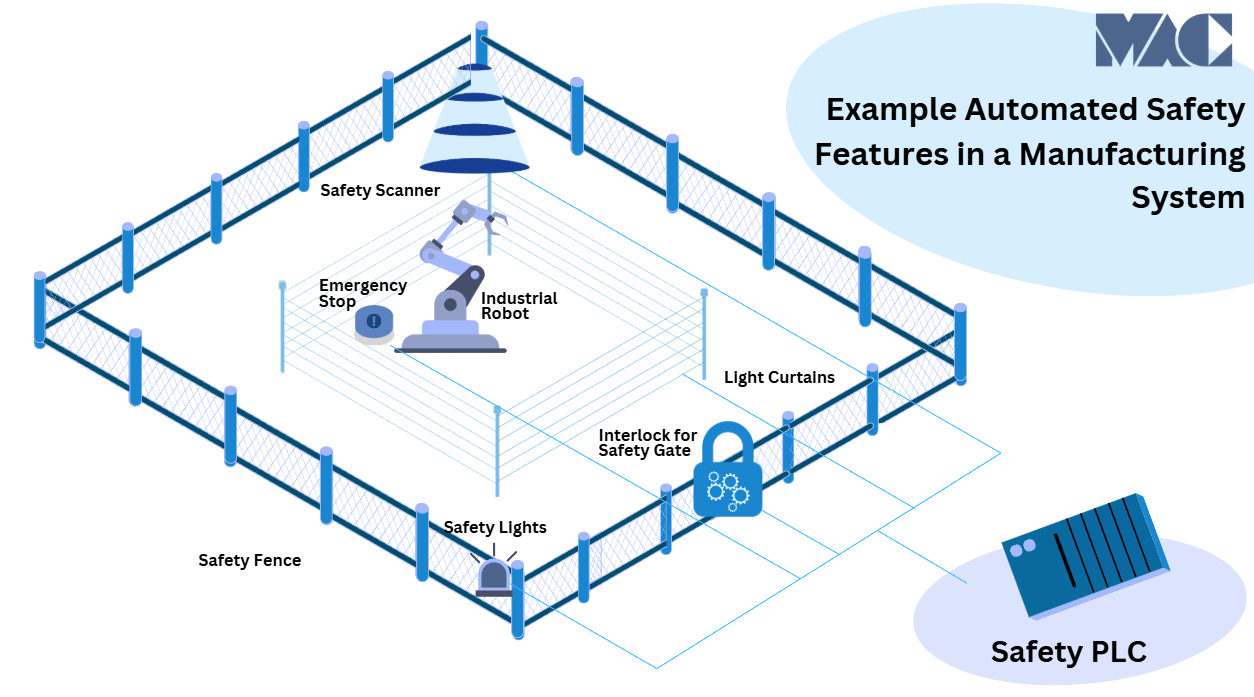
Physical Safeguarding
Physical guarding establishes controlled boundaries around robotic systems and may include:
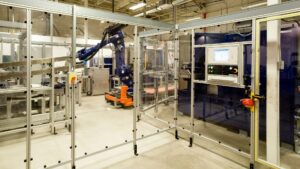
- Safety fencing and enclosures
- Interlocked access gates and doors
- Fixed and adjustable machine guarding
These measures prevent unintended access to robot work zones during operation, preventing accidents before they can occur.
Presence-Sensing Safety Devices
When operators must work near robotic systems, presence-sensing technologies help detect entry and trigger safe responses, including:
- Light curtains
- Safety laser scanners
- Area scanners and safety mats
These devices enable flexible automation layouts while maintaining required safety performance levels.
Safety Controllers and Safety PLCs
Safety-rated controllers monitor safeguarding devices and manage robot behavior during abnormal conditions. Typical safety functions include:
- Emergency stop control
- Safe torque off (STO)
- Safe speed monitoring
- Controlled stop and restart logic
Safety PLCs allow complex safety architectures while maintaining compliance with functional safety standards.
Emergency Stop Systems
Emergency stop devices provide immediate manual shutdown capability and are placed throughout robotic cells to allow rapid response when necessary.
Collaborative Robots and Manufacturing Safety
Collaborative robots, or cobots, are designed to operate closer to human workers than traditional industrial robots. While cobots include built-in safety features such as force and speed limiting, they still require proper safety evaluation.
Cobot safety depends on:
- Application-specific risk assessments
- Evaluation of tooling and payload hazards
- Defined operating speeds and modes
- Supplemental safeguarding when required
Collaborative robots are not inherently safe in all applications. Safety is determined by how the robot is deployed and used.
Risk Assessment as the Foundation of Robotics Safety
A formal risk assessment is a core requirement of robotics safety and should be conducted during system design and integration.
Robotics risk assessments evaluate:
- Task-specific hazards
- Severity and likelihood of potential injuries
- Required safeguarding measures
- Safe operating and maintenance procedures
The results guide safety device selection, control architecture, and system layout decisions.
Robotics Safety During Operation, Maintenance, and Teaching
Robotics safety extends beyond normal production cycles. Additional safeguards and procedures are required during:
- Programming and teaching modes
- Maintenance and troubleshooting activities
- Startup, shutdown, and fault recovery
Clear procedures, safety-rated operating modes, and proper training help ensure these activities are performed safely.
Training and Workforce Safety Awareness
Robotics safety systems are most effective when supported by comprehensive training programs. Operators and maintenance personnel should understand:
- System safety functions and limitations
- Emergency stop procedures
- Lockout/tagout (LOTO) requirements
- Proper interaction with robotic equipment
A trained workforce acts as an additional layer of protection within automated manufacturing environments.
Integrating Robotics Safety with Automation Systems
Safe robotics systems are more reliable, easier to maintain, and better suited for long-term production use. Well-designed safety architectures reduce nuisance stops, prevent equipment damage, and support consistent manufacturing performance.
By prioritizing robotics safety early, manufacturers create automation systems that operate efficiently, compliantly, and sustainably.
Robotics Safety as a Strategic Automation Advantage
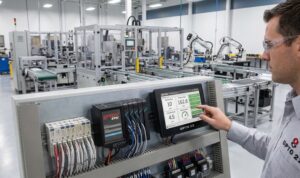
Modern robotics safety systems are commonly integrated with PLCs, HMIs, and SCADA platforms to provide:
- Real-time safety status visibility
- Diagnostic and fault information
- Event logging and safety resets
- Controlled access and authorization
Integration improves transparency and enables faster, safer responses to abnormal conditions.
Robotics Safety Integration Services
Robotics safety is most effective when addressed as part of a complete automation strategy. Proper system design, risk assessment, safeguarding selection, and integration are essential to achieving safe and reliable operation.
Whether implementing new robotic systems or upgrading existing automation, safety-focused integration helps manufacturers protect personnel while maximizing automation performance.
Plan a Safe Robotics Automation Strategy
Robotics safety should never be an afterthought. Addressing safety early reduces risk, shortens commissioning timelines, and supports long-term operational success.
Talk with an automation specialist to evaluate robotics safety requirements, risk mitigation strategies, and compliant system designs for your manufacturing environment.
Frequently Asked Questions About Robotics Safety in Manufacturing
Are industrial robots dangerous to work around?
Industrial robots can pose risks if not properly safeguarded. When designed, installed, and operated according to recognized safety standards, robotic systems can operate safely and reliably in manufacturing environments.
Do all robotic systems require safety fencing?
Not all applications require traditional fencing. Safeguarding requirements depend on risk assessment results and may include scanners, light curtains, or collaborative operation instead of fixed barriers.
Are collaborative robots safer than traditional industrial robots?
Collaborative robots include safety features that allow closer human interaction, but they still require application-specific risk assessments. Safety depends on the task, tooling, and operating conditions.
What standards apply to robotics safety in manufacturing?
Common standards include ISO 10218, ANSI/RIA R15.06, ISO 13849, IEC 62061, and applicable OSHA regulations. Compliance ensures systems meet accepted safety practices.
How is robotics safety maintained over time?
Ongoing maintenance, periodic safety validation, operator training, and system updates are required to ensure robotics safety remains effective throughout the system lifecycle.